 ADVOCACY DAY AT THE OHIO STATEHOUSE
A stable home gives people a foundation for work, school, health and everyday life. But across Ohio, rising housing costs and a shortage of affordable homes are making that foundation harder to maintain.
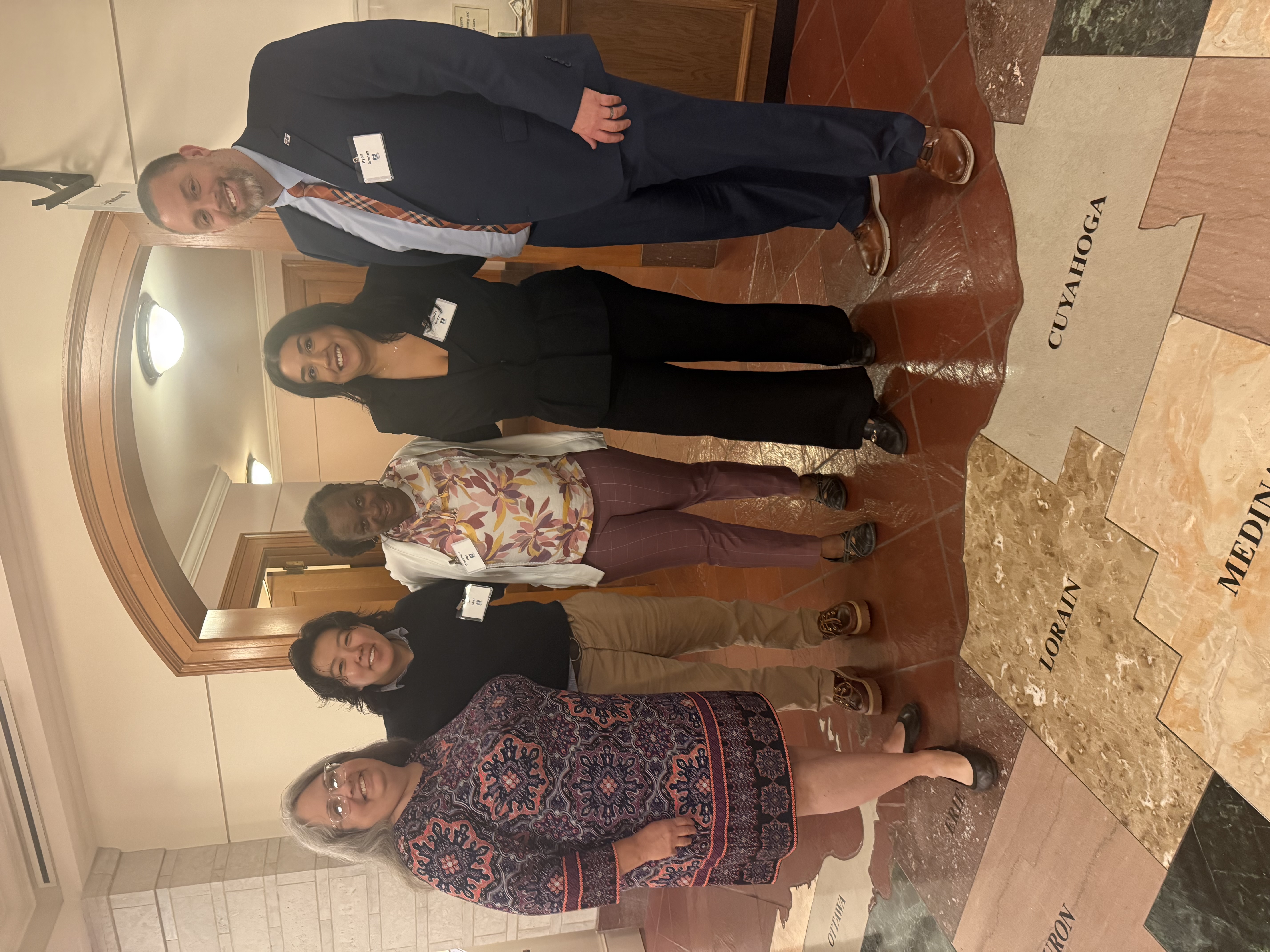
On October 7, United Way of Greater Lorain County President and CEO Ryan Aroney, Continuum of Care Coordinator Cassandra Marr, and Mobility Manager Liz Choi traveled to Columbus for Statehouse Advocacy Day, organized by the Coalition on Homelessness and Housing in Ohio, or COHHIO. Joined by representatives from the Elyria YWCA and Leadership Lorain County, our team participated alongside more than 100 housing advocates from across the state. The event brought local advocates together to discuss housing needs with legislators and their staff all focused on protecting housing resources and addressing barriers that prevent people from finding and maintaining stable housing.
Understanding Ohio Housing Challenges
According to the 2026 Out of Reach Report from the National Low Income Housing Coalition and COHHIO, a person working full time in Ohio needs to earn at least $23.82 per hour in order to afford a modest two-bedroom rental unit without spending more than 30% of their income on housing.
The average Ohio renter earns $19.59, which leaves a gap of $4.23 cents between their income and housing costs. That means hardworking families have less money for food, utilities, transportation, childcare, and less room to absorb an unexpected expense.
These challenges are complex and require several approaches to bring housing stability back to families in our community. During our trip to Columbus, we advocated for some of those solutions and talked with policymakers on what we’re seeing in Greater Lorain County.
Protecting the Ohio Housing Trust Fund
Our group encouraged lawmakers to safeguard the Ohio Housing Trust Fund, a major source of state support for affordable housing and homelessness. The fund supports emergency shelters, supportive housing, homelessness prevention, and rapid rehousing. Many of the organizations in our community use those funds to respond when our neighbors are facing a housing crisis, and protecting the fund will preserve those systems.
Making Identification More Accessible
A missing birth certificate or photo ID can become a huge obstacle for someone on the road to regaining their stability. They’re required to secure employment, housing, and even resource services. Our team heavily supported legislation intended to reduce those barriers through bipartisan legislation which would waive the fee for one certified birth certificate each year for those who are verified as experiencing homelessness and expand access to free state identification cards for homeless youths under the age of 18.
Eviction Records
Our group also showed support for Senate Bill 83, a bipartisan bill addressing eviction procedures that contains protection concerning eviction records, and legal counsel for low-income tenants.
An eviction filing alone is the beginning of a legal proceeding and does not, by itself, mean that the tenant has been ordered to vacate. These eviction filings are currently permanent record, and can be accessed by landlords looking to approve a tenant application and used to deny housing even if the eviction was wrongly filed or the tenant was able to catch up on rent due. The bill would seek to seal these filings until if/when a tenant is actually evicted.
Create Affordable Homeownership Opportunities
We also expressed support for House Bill 765 which modifies Ohio’s affordable single-family home tax credit.
As it was introduced, the bill would allow non-profit housing developers to apply directly for the credit and allow those credits to be claimed as individual homes are completed and sold. These changes are intended to make the program more practical for developing affordable homes and expanding opportunities for individuals to own their own homes.
Take Action
At United Way of Greater Lorain County, bringing local needs to policymakers is part of working toward lasting community stability. Direct assistance helps people navigate an immediate crisis. Advocacy helps address the policies, resources and barriers that prevent crisis in the first place.
Stay up to date with opportunities to take action and share your voice by signing up for our Advocacy Blast - our mailing list of Volunteer Advocates who are ready to respond when the moment is right.